

I guess we’re all making mini totes now.
In March 2024, a $2.99 canvas bag turned grocery runs into a contact sport. Trader Joe's released its mini totes in four colors, and within days shoppers were lining up, rushing displays, and running into a five-per-person limit. TikTok clips of the frenzy racked up millions of views, and resellers listed the bags on eBay for hundreds of dollars. The press reached for the obvious comparison: this was the new Stanley cup.
Two years later, the aftershocks are everywhere. Costco, Ralphs, 99 Ranch, Publix and more now sell their own mini totes. Some of them get why the original worked. Some of them very much don't. So I rated them.
Why the Trader Joe's tote worked
The mini tote wasn't a new product. It was a shrunken version of a bag Trader Joe's already sold, in the same colors, with the same handles. That's the first lesson: the bag worked because the brand was already beloved. People weren't buying canvas. They were buying a wearable signal that says I'm a Trader Joe's person.
The rest of the formula is classic drop culture:
A price that removes all hesitation. At $2.99, buying five is an impulse, not a decision.
Color as a collecting mechanic. Four colors means you don't want one bag, you want the set.
Real scarcity. Limited stock and purchase caps turned a grocery item into a hunt, and the hunt became the content.
A product that photographs well. A tiny version of something familiar is inherently cute and inherently shareable.
None of that was a paid campaign. Trader Joe's barely advertises. Its customers did the marketing because the brand had already earned that loyalty.
The copycat wave
When something goes viral, every brand in the category faces the same question: do we join in, and if so, how? Jumping on a trend can be smart. It shows a brand is paying attention, and it borrows energy from a conversation people are already having.
But there's a difference between joining a trend and photocopying it. The brands that win take the underlying mechanic (cheap, cute, collectible, branded) and run it through their own identity. The brands that lose copy the surface (a small canvas bag) and forget the reason anyone wanted one: to show off a store they love.
That's the lens for the ratings below. The question isn't just "is this a nice bag?" It's "does this bag make me want to walk around advertising this store?"
How I'm rating them
Each bag gets a score out of five stars, weighed on four things:
Brand flex: Does it clearly say which store it's from, and would you be proud to carry it?
Price: Is it an easy impulse buy, like the $2.99 original?
Collectibility: Are there colors or editions that make you want more than one?
Brand fit: Does it feel like this store, or like a generic copy?
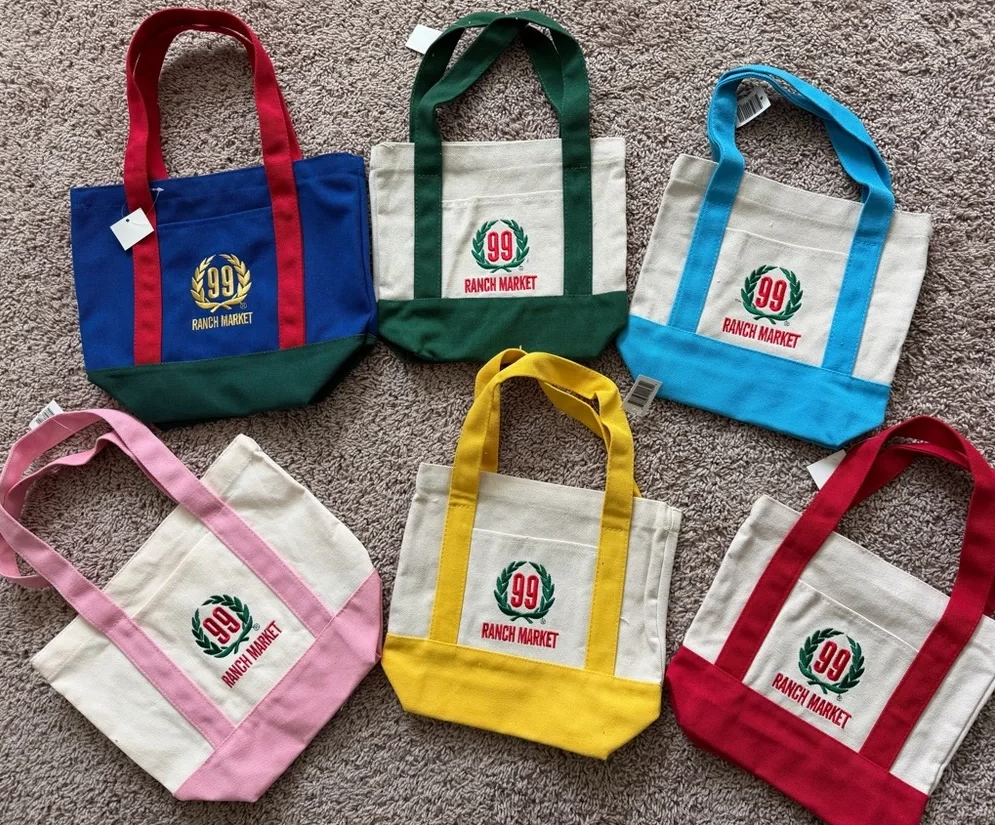
99 Ranch Market ★★★★½
This is the one that actually understood the assignment. 99 Ranch released its mini totes in a rainbow of colors (blue, red, green, yellow, pink and more), which turns one purchase into a quest to complete the set. They retail for $2.99, the exact price of the original, and they're labeled "limited," and resellers are already listing single bags for around $17–$20 and full sets for about $45, the clearest sign a drop worked. It also carries real community pride: for a lot of Asian American shoppers, 99 Ranch is a cultural anchor, and this bag lets people wear that. Half a star off only because, like the original, you may have to fight a reseller for it.
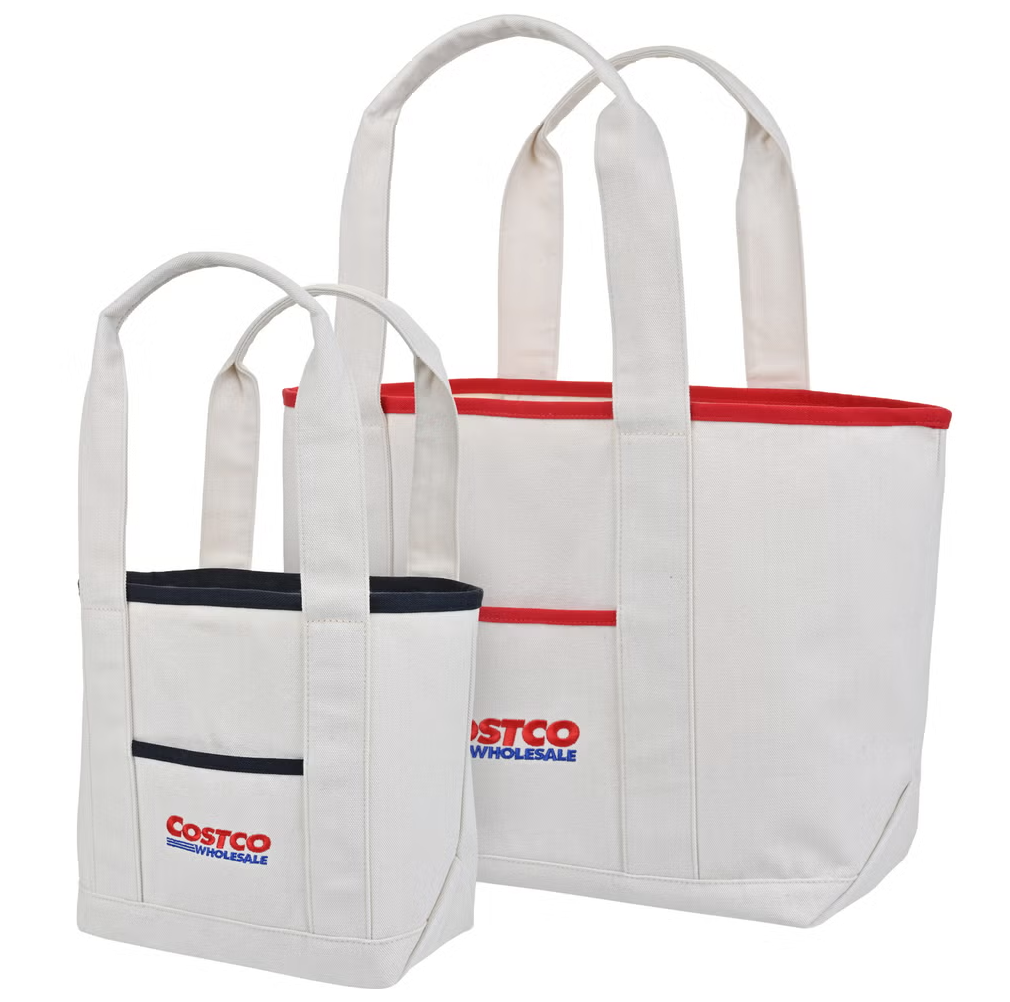
Costco ★★★★
Costco did the most Costco thing possible: you can't buy one tote, you buy two. The set pairs an XL tote with a smaller one in cream heavy-duty canvas, with an embroidered logo on the exterior pockets and contrast-color trim along the top. That's a smart, on-brand twist on the trend (bulk, but make it cute). The catch: one neutral colorway, no collect-them-all energy, and the small tote isn't really "mini." But at $10.99 for the pair, you're paying about $5.50 a bag for genuinely sturdy, good-looking canvas, and the XL is big enough to replace your everyday grocery tote. Less of a viral moment, more of a smart buy, which is exactly what Costco members come for.
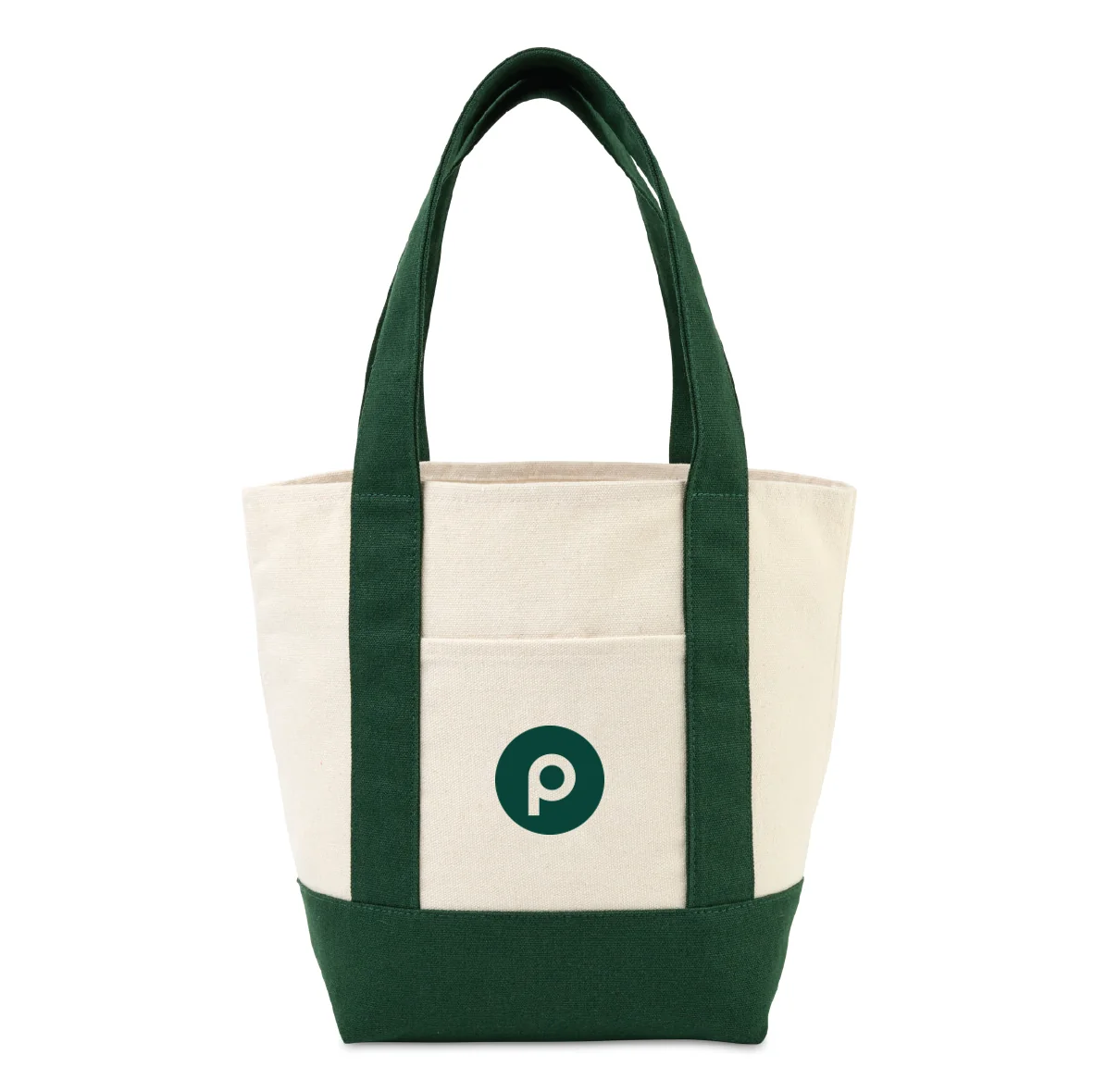
Publix ★★★
Publix fans are famously loyal, so the brand-flex potential here is huge. The bag itself is solid: Publix green, a front stash pocket, PVC-free construction, and about 13.4" x 10.6" x 5.9". But at $11.95, sold through the Publix company store website, it's four times the price of the original and nowhere near the checkout lane where impulse buying happens. It's merch, not a drop.
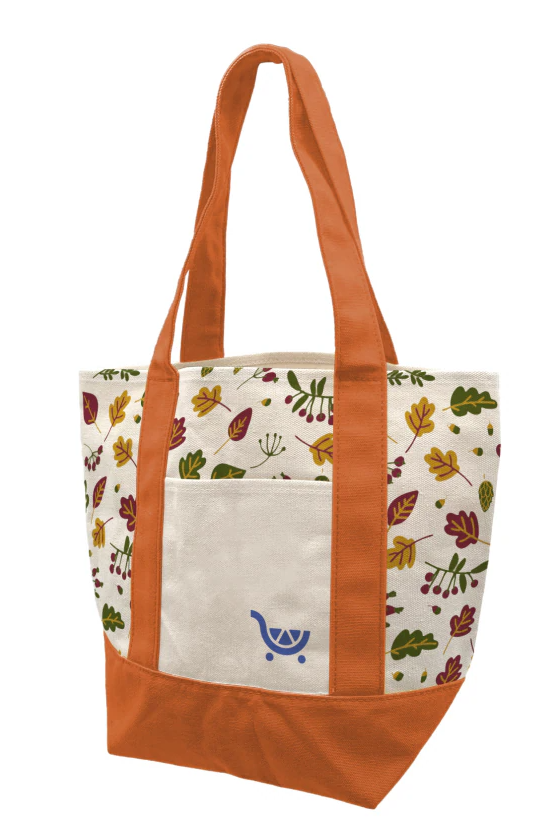
Ralphs ★★
The Fall Leaves mini canvas bag is $4.99 and genuinely cute. The problem? It's made by Earthwise, a third-party bag brand, and says nothing about Ralphs at all. That misses the entire point of the trend. Nobody was lining up for tiny canvas. They were lining up to show the world where they shop. This is a seasonal bag sitting near the trend, not a Ralphs bag joining it.
Smart & Final ★★★★½
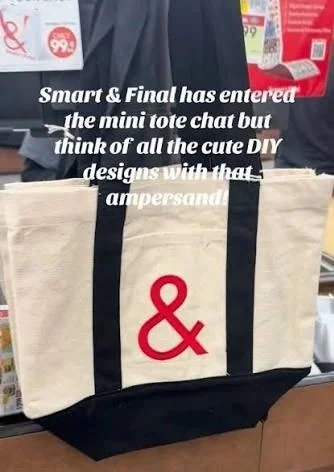
Smart & Final's tote is the sleeper hit of this list, and it's all because of one character. Instead of slapping the full logo on, it features an embroidered ampersand. That's not a random design choice: back in 2015, Smart & Final rebranded around the "&", using it to stand for pairings like warehouse and market, and its two founders, Mr. Smart and Mr. Final. A decade later, that symbol is strong enough to carry a bag on its own. It's subtle, a little insider-y, and very wearable, which is exactly the kind of brand flex that makes people ask "wait, where'd you get that?" And at $3.99, it's only a dollar more than the Trader Joe's original, so it stays firmly in impulse-buy territory.
H Mart ★★★★
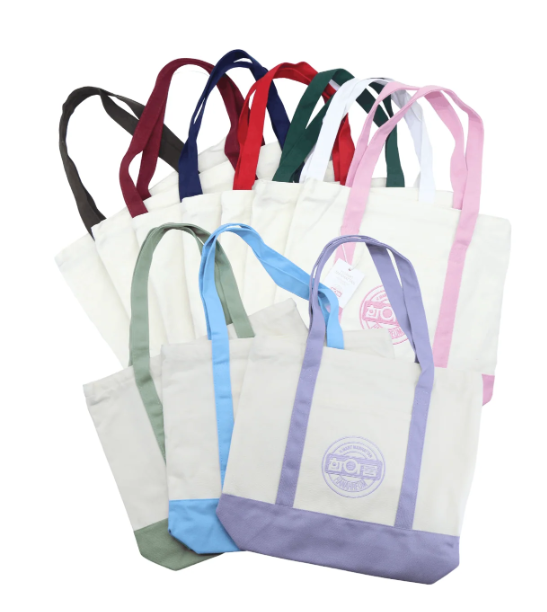
H Mart's Manhattan store skipped "mini" and went straight for nostalgia. The bag is embroidered with Hanahreum, H Mart's original Korean name, which longtime shoppers will recognize and newer fans will want to ask about. That's a brand story you can carry. It comes in a big spread of colors (navy, red, pink, green, lavender, light blue and more), plus a zipper and an inner pocket, so it works as an actual everyday bag. The drawback is the $19.99 price and online-merch-shop setup, which makes it a keepsake rather than an impulse grab. Still, no other store on this list turned its own history into the selling point this well.
The takeaway
The mini tote was never about the tote. It was about a brand people already loved giving them a cheap, cute, scarce way to show it. The stores that scored highest here didn't just shrink a bag. They asked what their version of that signal looks like, whether that's a full color set, a bulk two-pack, or a bag that carries cultural pride.
So before your brand jumps on the next viral moment, ask the question the tote copycats should have: if someone carries this in public, will they be proud it has our name on it? If the answer is no, you're not joining a trend. You're just selling a bag.